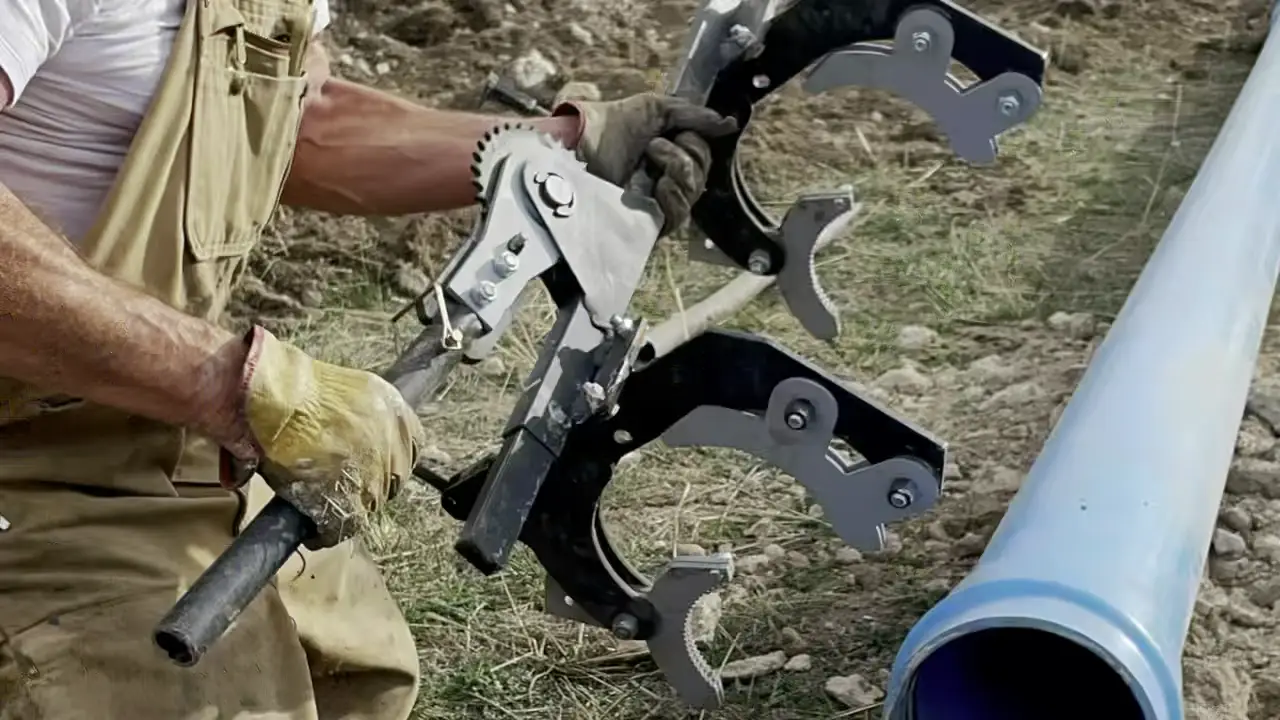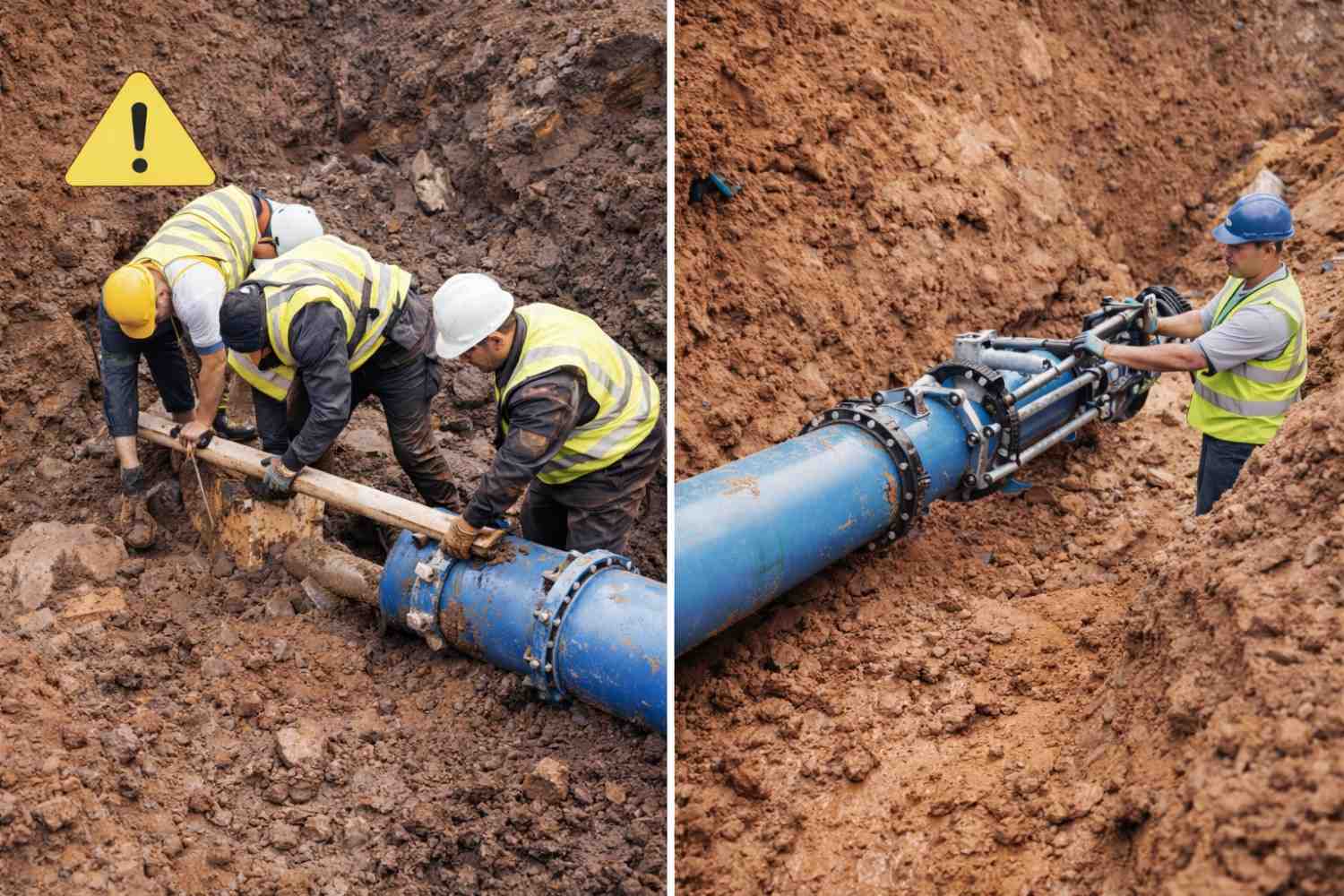
Walk onto almost any municipal job site, and you’ll see it: a block of wood jammed against a pipe bell, a 6-foot digging bar leveraged against the trench wall, and two guys straining to push a spigot home. For residential 4-inch lines, the “bar and block” method is a habit. For industrial 8-inch, 10-inch, or 12-inch systems, it’s a liability.
As pipe diameters increase, the friction coefficient of the gasket multiplies. The force required to seat a joint skyrockets, and manual leverage stops being hard work and starts becoming a safety violation.
This is exactly why The Pipefitter designs purpose-built industrial pipeline installation tools that replace guesswork with controlled mechanical force.
In this analysis, we break down the financial and physical costs of sticking to manual leverage versus switching to engineered equipment built for industrial-scale work.
The Physics of Failure: Why Leverage Limits Out
The “bar and block” method relies on uneven force. When an operator pushes on one side of the bell, the pipe naturally pivots or cocks to the opposite side. In the field, we call this fish-tailing.
When a spigot enters a bell at an angle, it hits the rubber gasket unevenly. Instead of compressing the gasket, the spigot catches the edge and rolls it out of its groove. The result is a rolled gasket.
You usually do not discover that failure until the trench is backfilled and the system fails its pressure test. At that point, you are not just evaluating tools. You are excavating buried infrastructure to repair a leak that should never have existed.
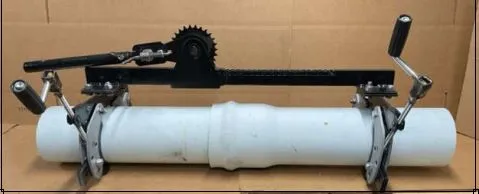
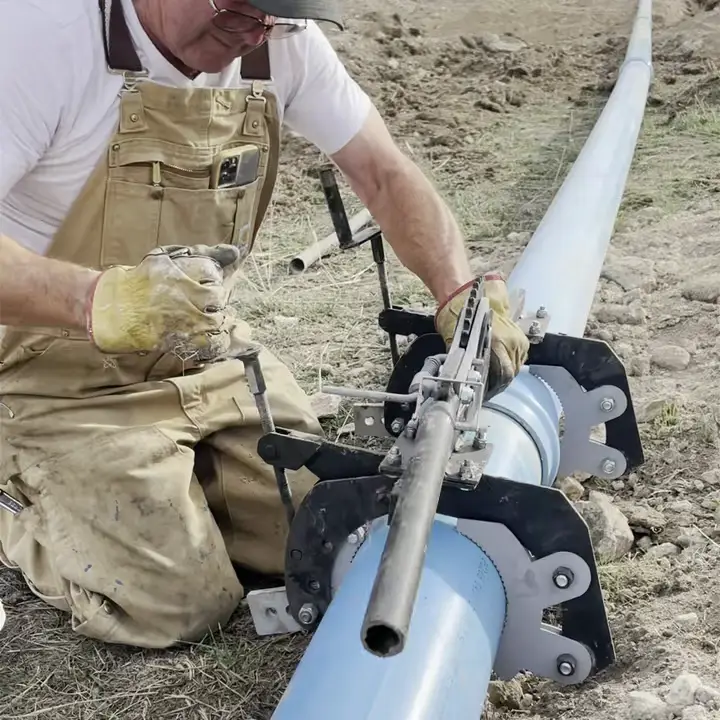
This is where heavy-duty pipe fitting solutions separate themselves from improvised methods. Mechanical assembly applies linear force, pushing the pipe straight in, parallel to the centerline. The gasket compresses exactly as the manufacturer intended, creating a seal designed to last decades.
The Hidden Labor Costs of “Free” Tools
Contractors often argue that a digging bar is free, while mechanical equipment costs money. That logic ignores the largest line item in any bid: labor.
A standard manual installation for large-diameter PVC typically looks like this:
- Person A positions the block and operates the bar.
- Person B guides the spigot to prevent misalignment.
- Person C often braces the pipe to keep previous joints from separating under force.
That is three salaries required to join one stick of pipe.
With proper industrial pipe fitting equipment, the equation changes. Because the tool clamps securely and aligns the joint mechanically, one operator can lubricate, align, and press the pipe home without wrestling the material.
The math is simple:
Manual Method: 3 Workers x 1 Hour = 3 Man-hours per section
Mechanical Method: 1 Worker x 1 Hour = 1 Man-hour per section
When you choose The Pipefitter, you are not just buying equipment. You are reallocating two skilled workers to other productive tasks on the job site.
Safety: When Brute Force Breaks Bodies
Manual pipe joining is a leading cause of lower back strain and slip-and-fall incidents in trench environments. Applying maximum force to a pry bar while standing on uneven, muddy soil creates unstable leverage conditions.
If the bar slips under load, it becomes a projectile. If the worker loses footing, the risk of serious injury increases immediately.
Switching to heavy-duty pipe fitting tools removes the physical strain. The tool generates the pulling force. The operator controls the mechanism. What was once a high-exertion task becomes a controlled mechanical process.
That reduction in strain keeps crews productive throughout the day and lowers exposure to workers’ compensation claims that can cost far more than any tool investment.
Why High-Performance Requires Precision, Not Power
Industrial pipe is not indestructible. We have seen bells cracked by excavators attempting to nudge pipe into place and spigots chipped by aggressive prying.
High-performance pipe fittings, particularly C900 and Schedule 80 systems, rely on smooth, continuous insertion. Jerky or shock-based force can create micro-fractures in PVC or cast iron that compromise long-term reliability.
Professional PVC pipe installation tools are engineered to grip without scarring and apply constant, steady pressure. This ensures full insertion depth without over-traveling or damaging the internal stop in the bell.
Precision protects the material. Power alone does not.
The Verdict: Professional Tools for Professional Results
If you are installing residential irrigation, a block of wood may be sufficient. If you are bidding municipal water mains, industrial drainage systems, or commercial infrastructure, brute force is quietly costing you time, labor, and risk.
As experienced industrial pipe fitting equipment suppliers, we have seen the shift toward verified, repeatable mechanical installation methods across the industry.
The choice is simple. You can hope the gasket did not roll, or you can control the force to ensure it did not.
Stop fighting the pipe. Start controlling the install. Equip your crew with The Pipefitter’s industrial pipe fitting equipment and bring mechanical precision to every joint.