Accuracy in PVC pipe installation starts with one critical factor. The pipe must reach the correct insertion depth inside the fitting. When this is done right, the joint becomes strong, sealed, and durable. When it is not, even a well-installed system can fail early.
At The PipeFitter, we focus on eliminating inconsistency in pipe joining. Through engineered professional pipe alignment solutions and purpose-built PVC pipe tools, we help crews achieve precise, repeatable insertion depth across every installation.
Understanding Correct Insertion Depth
Insertion depth refers to how far the pipe is seated inside the socket of a fitting. Manufacturers define this depth to ensure a proper bonding surface and structural strength.
When we achieve full insertion, three things happen:
- The solvent cement bonds evenly across the entire contact area
- Internal pressure is distributed uniformly
- The joint resists separation under load and temperature changes
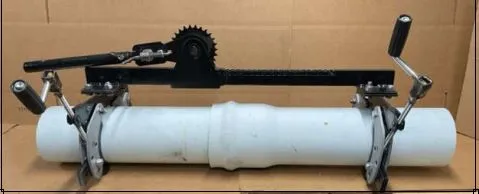
Our PVC pipe fitting tools are designed to consistently reach this depth without relying on estimation or force.
What Research and Field Data Show
Industry installation guidelines and field observations highlight that incomplete insertion is one of the leading causes of joint failure in PVC systems.
Common consequences include:
- Reduced joint strength due to limited bonding surface
- Micro-gaps that allow slow leakage over time
- Higher failure rates in pressurized systems
- Increased maintenance cycles and repair costs
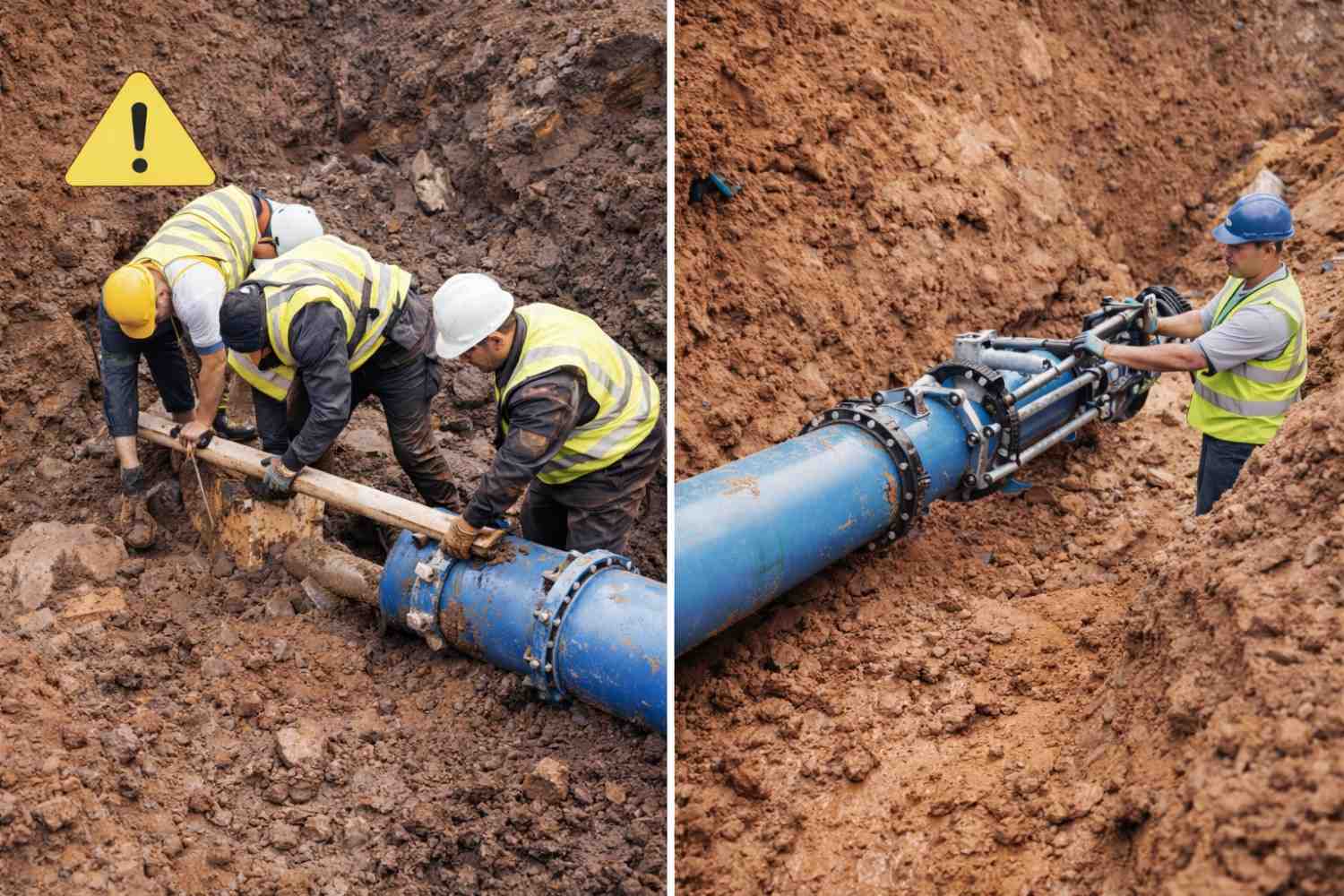
Studies in pipeline installation workflows also show that controlled mechanical joining using PVC pipe installation tools improves consistency and reduces installation errors significantly compared to manual methods.
Factors That Affect Insertion Depth
We design our approach around real jobsite variables that impact how well a pipe seats into a fitting.
Pipe Diameter and Material Behavior
Larger diameter pipes require more force to achieve full insertion. PVC also has slight flexibility, which can affect alignment during joining.
Temperature Conditions
Cold temperatures increase material stiffness and slow down cement curing. Hot conditions accelerate curing, reducing the working time available for insertion.
Surface Condition
Rough cuts, debris, or moisture interfere with smooth entry and bonding effectiveness.
Alignment Accuracy
Even a small angular offset can prevent the pipe from reaching the socket stop.
Application of Force
Uneven or insufficient pressure results in partial insertion, especially in field conditions without proper support.
Our pipe fitting alignment tools are built to address each of these factors with controlled, stable operation.
Our Method for Achieving Consistent Results
We follow a structured process using our PVC pipe-joining tools to ensure every joint meets the required depth and quality standards.
Step 1: Depth Referencing
We begin by dry-fitting the pipe into the fitting and marking the insertion depth. This step creates a clear visual checkpoint during final assembly.
Step 2: Surface Preparation
We clean and smooth both surfaces. Proper preparation reduces resistance and ensures uniform cement distribution.
Step 3: Cement Application
We apply cement evenly across both the pipe and fitting. Balanced coverage is essential for chemical bonding.
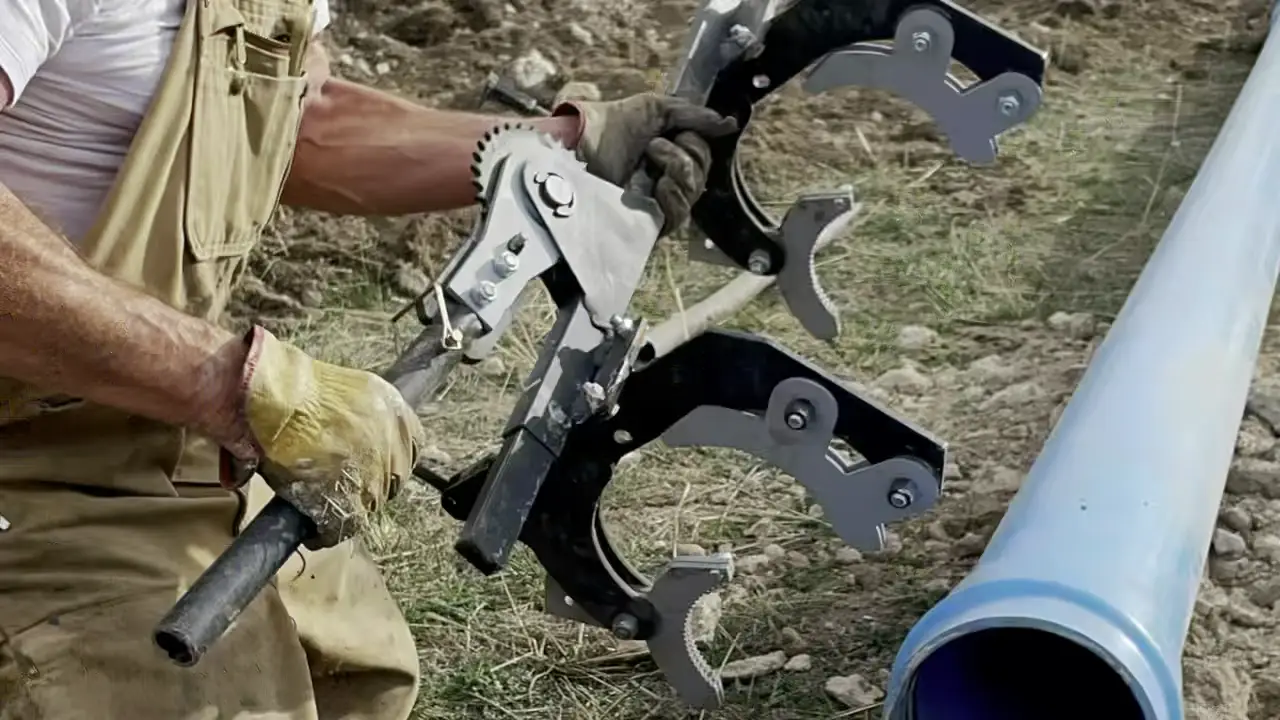
Step 4: Controlled Alignment
We position the pipe and fitting using our professional pipe alignment solutions iN Swan Valley. This eliminates angular deviation and stabilizes the components before insertion.
Step 5: Mechanical Insertion
We use our industrial pipe alignment tools to apply steady, linear pressure. This allows the pipe to travel smoothly to the marked depth without interruption.
Step 6: Stabilization
Once inserted, we maintain position briefly to prevent push-back caused by internal stress or trapped air.
Step 7: Verification
We confirm that the pipe has reached the marked line and check for uniform cement bead formation around the joint.
Why Controlled Pressure Matters
Manual joining depends heavily on physical strength and timing. This introduces variation from one joint to another.
With engineered PVC pipe hand tools, we apply consistent pressure along the axis of the pipe. This ensures:
- Smooth insertion without sudden stops
- Equal force distribution across the joint
- Reduced risk of internal misalignment
Controlled pressure is especially important in large-scale installations where consistency must be maintained across hundreds of joints.
Performance Benefits of Using Advanced Tools
Using high-quality PVC pipe installation tools changes both the speed and reliability of pipe joining operations.
Improved Installation Speed
Mechanical systems reduce the time required to complete each joint. Crews can maintain steady progress without repeated adjustments.
Lower Physical Strain
Operators do not rely on excessive force. This reduces fatigue and improves overall productivity.
Higher Joint Accuracy
Every joint reaches the intended depth, which improves system integrity.
Reduced Rework
Accurate insertion eliminates common causes of failure, reducing the need for repairs or replacements.
Our industrial pipe alignment tools consistently deliver these outcomes in demanding environments.
Best Practices We Apply on Every Job
Based on field experience and installation standards, we follow these principles:
- Always mark the insertion depth before cement application
- Ensure surfaces are clean and properly prepared
- Maintain straight alignment throughout the process
- Use steady, controlled pressure rather than sudden force
- Verify each joint visually and physically
These practices, combined with our reliable PVC pipe-fitting tools, create a predictable and efficient workflow.
Identifying a Properly Inserted Joint
We evaluate each joint using clear visual and structural indicators:
- The pipe aligns exactly with the marked insertion line
- A consistent bead of cement is visible around the circumference
- The joint remains stable without movement
- The pipe and fitting sit in a straight line
These indicators confirm that the joint has been completed to specification using precise PVC pipe tools.
Long-Term Impact of Accurate Insertion
Correct insertion depth does more than prevent immediate issues. It improves the overall performance of the pipeline system.
- Extends the service life of joints
- Maintains pressure integrity
- Reduces system downtime
- Minimizes maintenance requirements
Investing in proper tools and processes leads to measurable long-term savings.
Why We Focus on Precision Over Force
Pipe installation environments often encourage fast work under pressure. In such conditions, shortcuts can lead to inconsistent results.
At The PipeFitter, we replace manual effort with engineered accuracy. Our pipe fitting alignment tools allow operators to work with control rather than force, improving both safety and output quality.
Ready to Improve Your Pipe Installation Results?
If you want faster installations, stronger joints, and fewer callbacks, it is time to upgrade the way you work.
Explore The PipeFitter range of PVC pipe installation tools and PVC pipe joining tools built to deliver accurate insertion depth, consistent alignment, and reliable performance in real jobsite conditions.
Shop now or get in touch with our team to find the tool simplifies your next project.