Environmental conditions influence how PVC fits, bonds, and holds under pressure. Heat, cold, humidity, and unstable soil change how the pipe behaves during joining, and each one affects alignment, insertion depth, and curing speed. Installers using PVC pipe tools or pipe fitting alignment tools often see issues not because the materials are faulty, but because the jobsite environment works against them.
Why Climate and Jobsite Conditions Matter in PVC Pipe Installation
PVC joining seems straightforward: clean the surface, apply solvent cement, push to full insertion depth. In controlled indoor conditions, this works. Outdoors, the picture changes. Temperature shifts, moisture, uneven soil, and fast-drying or slow-curing cement alter how the joint behaves at every stage.
Professionals who work with PVC pipe fittings tools know this well. A small change in weather can turn a routine installation into a leak risk if the installer doesn’t adjust the technique. Many crews who rely on The PipeFitter or similar PVC pipe hand tool systems pay close attention to the climate because alignment isn’t just a mechanical process; it’s a response to conditions on the ground.
How Heat Affects PVC Pipe Joining
High Temperatures Change Pipe Flexibility
In hot conditions, PVC softens. This sounds convenient, but it introduces risks. Softer pipe flexes more easily, which can lead to over-insertion or uneven insertion, especially when installers push joints by hand. High heat also accelerates cement flash-off, reducing working time and increasing the chance of partially cured joints.
This is one reason crews often rely on PVC pipe joining tools to apply steady, controlled pressure. Heat creates less resistance, so precision matters more.
Practical Tips for Hot-Weather Installation
- Store pipes and cement in the shade before joining
- Check insertion depth markings more often
- Use consistent mechanical pressure rather than body weight
- Allow the joint to cool before handling or backfilling
Cold Weather Challenges: Rigid Pipes and Higher Resistance
Low Temperatures Make PVC Harder to Join
Cold temperatures increase PVC rigidity. The pipe resists movement, and the friction between the bell and spigot rises. Installers often believe they’ve reached full insertion when the joint simply stops due to cold-related stiffness.
When joining in winter, professional pipe alignment solutions create predictable, repeatable motion even when pipes refuse to move easily.
Best Practices for Cold-Weather Joining
- Keep cement warm for easier application
- Allow extra curing time before handling
- Avoid forcing stiff pipes, which can crack
- Use alignment tools that apply smooth, progressive pressure
Humidity’s Impact on Solvent Cement Bonding
Moisture Slows Curing and Weakens Bonds
High humidity affects solvent cement differently. Instead of drying fast like in heat, it slows down evaporation and extends cure time. Moisture on the pipe surface creates contamination that reduces bond strength. Cement becomes runnier, and coverage becomes less predictable.
PVC pipe installation tools help keep the joint stable while the bond develops, but installers still need to adjust timing.
Controlling Moisture During Assembly
- Wipe surfaces thoroughly
- Prime consistently
- Avoid joining immediately after rain or heavy condensation
- Brace pipes so they don’t shift during slow curing
Soil and Trench Conditions That Affect Joint Alignment
Unstable Ground Can Move Pipes Before the Joint Sets
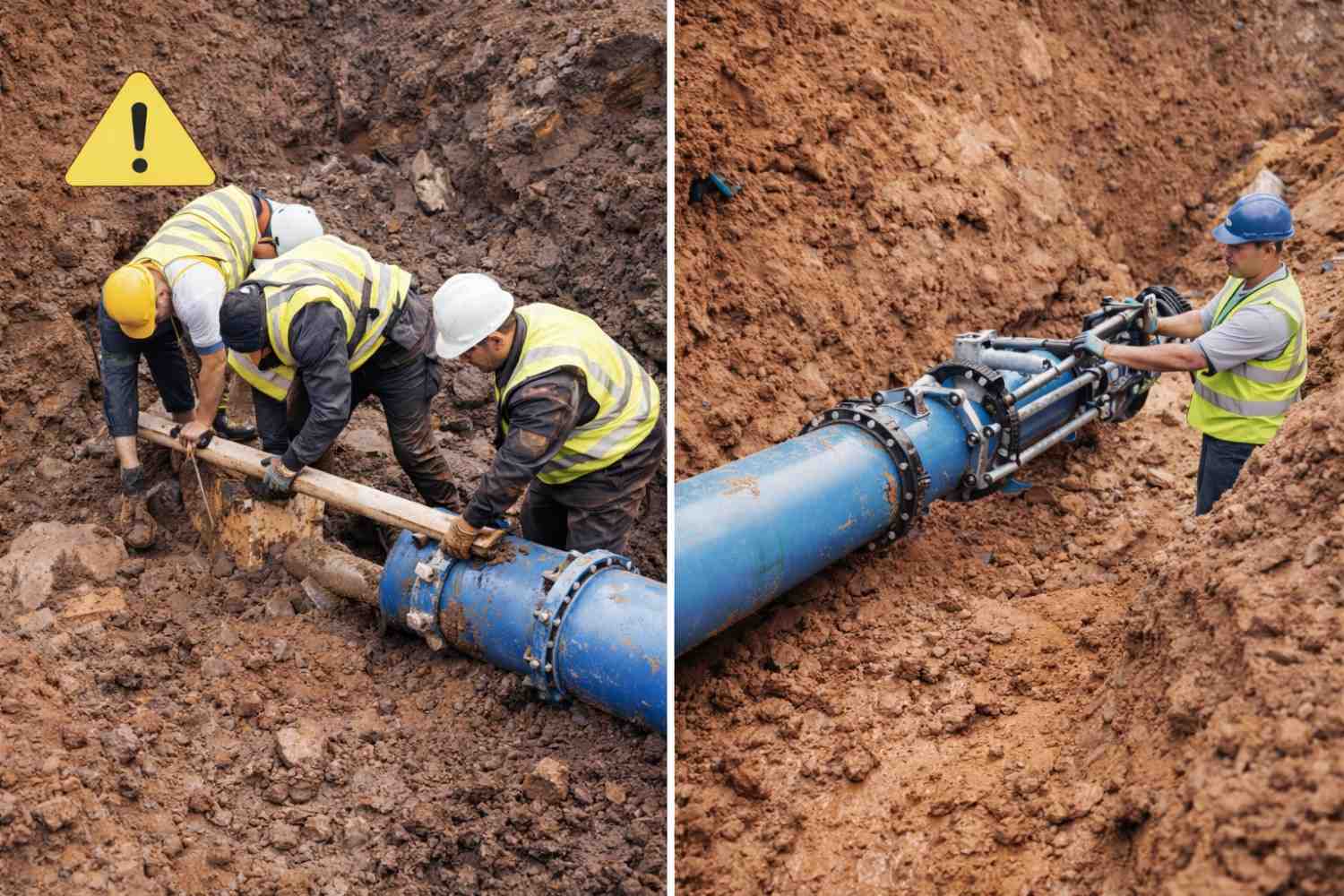
Soil type influences how much a pipe shifts during curing. Loose sand allows movement. Clay transmits vibration. Rocky trenches force pipes into awkward angles. Even a minor shift during early curing can create micro-gaps inside the joint.
Industrial crews using industrial pipe alignment tools often deal with long pipeline runs where soil conditions vary every few feet. Consistent alignment becomes essential, not optional.
Supporting Pipes in Tough Soil Conditions
- Compact bedding evenly before laying pipe
- Add temporary supports to maintain alignment
- Avoid backfilling until the joint reaches its initial set
- Keep heavy equipment away during early cure time
Environmental Stress During Curing: The Overlooked Factor
Cure time varies based on the climate. Hot weather accelerates it, cold slows it, and humidity changes the consistency. The constant across all conditions is this: any movement before the joint sets creates problems later.
Many field technicians see leaks not during installation but during pressure testing days after. Small shifts during curing often go unnoticed. This is where pipe fitting alignment tools or PVC pipe joining tools make a measurable difference. They keep the joint aligned and stable long enough for the bond to take shape, regardless of the climate.
When Consistent Pressure and Alignment Improve Outcomes
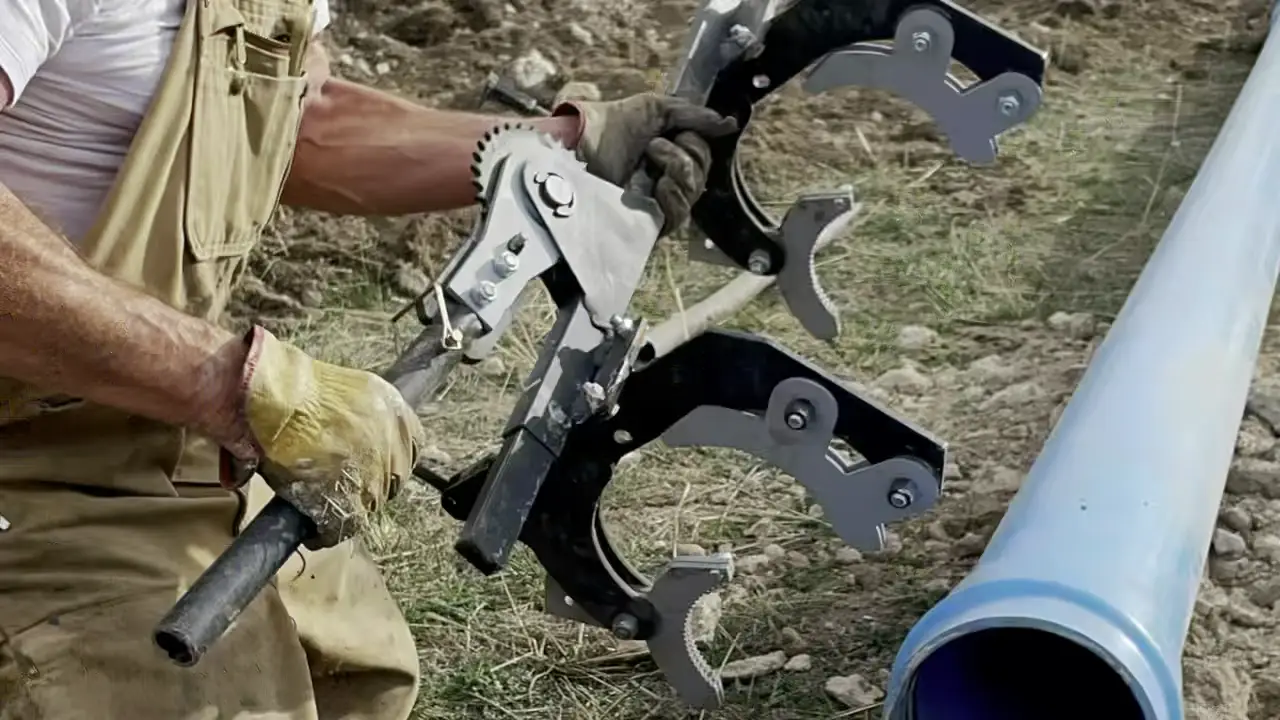
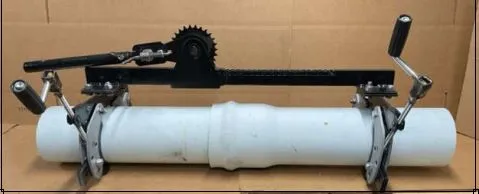
Installers who want repeatable results often prefer mechanical pressure over brute force. The goal isn’t to replace technique—it’s to remove guesswork. Tools like The PipeFitter provide steady, reliable alignment that reduces the influence of weather, soil movement, and human fatigue.
In practical terms, professional pipe alignment solutions help with:
- Full insertion depth, even when pipes resist
- Preventing over-insertion in hot conditions
- Reducing strain in cold weather
- Keeping joints stable during slow, humid curing
- Maintaining alignment in inconsistent soil
This isn’t about pushing a product. It’s about giving installers predictable control in unpredictable environments.
Field Checklist: Preparing PVC Joints for Challenging Environments
A quick checklist crews can use on any jobsite:
- Keep pipes and cement within the recommended temperature ranges
- Cut clean, square edges using PVC pipe cutting tools
- Clean and prime every joint
- Check trench stability before assembly
- Support the pipe during curing
- Verify insertion depth, not just “how it feels”
- Adjust cure time based on temperature and humidity
Many technicians who use The PipeFitter tools incorporate these steps because they reduce call-backs and improve consistency.
Final Takeaway
PVC performs well when installers adjust for heat, cold, humidity, and soil. With the right approach and tools designed for alignment and stability, crews achieve stronger, longer-lasting joints in any climate. Environmental conditions will always influence how a joint behaves, but preparation and consistent technique keep that under control.
Need Reliability in Any Weather?
If your crew works in shifting climates or unpredictable soil conditions, consistent alignment helps every joint.
Explore The PipeFitter’s lineup of PVC pipe tools and get support from a team that understands real jobsite challenges.